What Does EDP and EDT Mean in Perfume?
Crafted for Every Occasion - RocheHayatt
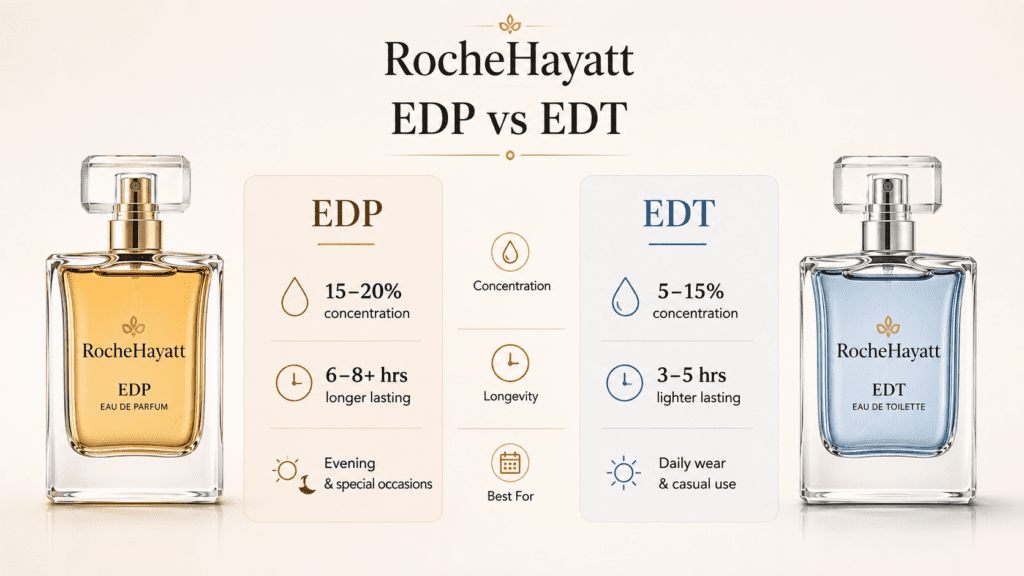
If you’ve ever wondered what does EDP and EDT mean in perfume, you’re not alone. These abbreviations appear on almost every fragrance bottle, yet many perfume buyers don’t fully understand what they represent. Knowing what does EDP and EDT mean in perfume helps you choose a fragrance that matches your lifestyle, budget, and personal preferences.
Whether you’re shopping for luxury fragrances, designer perfumes, or affordable scents, understanding fragrance concentration is essential. In this complete guide, you’ll learn everything about Eau de Parfum (EDP) and Eau de Toilette (EDT), including their differences, longevity, scent strength, pricing, and which one is best for different occasions.
What Does EDP and EDT Mean in Perfume?
The terms EDP and EDT refer to the concentration of fragrance oils in a perfume.
- EDP = Eau de Parfum
- EDT = Eau de Toilette
The higher the fragrance oil concentration, the richer, stronger, and longer-lasting the perfume generally becomes.
These names do not indicate the quality of a perfume. Instead, they describe how concentrated the fragrance formula is.
EDP vs EDT at a Glance
| Feature | Eau de Parfum (EDP) | Eau de Toilette (EDT) |
|---|---|---|
| Full Form | Eau de Parfum | Eau de Toilette |
| Fragrance Oil | 15–20% | 5–15% |
| Longevity | 6–10 hours | 3–6 hours |
| Projection | Strong | Moderate |
| Best For | Evening, Winter, Parties | Office, Summer, Daily Wear |
| Price | Higher | More Affordable |
| Number of Sprays | Fewer | More Frequent |
| Scent Intensity | Rich & Deep | Fresh & Light |
What Does Eau de Parfum (EDP) Mean?
An Eau de Parfum contains a higher concentration of perfume oils, making it more intense and long-lasting.
EDP fragrances are designed to stay on your skin for several hours while revealing different fragrance layers over time.
Benefits of Eau de Parfum
- Long-lasting fragrance
- Rich scent profile
- Better value despite higher price
- Ideal for special occasions
- Performs well in cooler weather
Many luxury perfume brands prefer Eau de Parfum because it creates a premium fragrance experience.
Characteristics of EDP
Higher Perfume Oil Concentration
The fragrance contains approximately 15–20% perfume oil.
Longer Performance
Most EDP perfumes last:
- 6–8 hours
- 8–10 hours on clothing
- Even longer in cool weather
Stronger Sillage
EDP leaves a noticeable scent trail that others can detect.
What Does Eau de Toilette (EDT) Mean?
An Eau de Toilette contains a lower concentration of fragrance oils compared to EDP.
Its lighter composition makes it perfect for everyday use, especially in warmer climates.
Characteristics of EDT
Lighter Formula
Usually contains 5–15% perfume oils.
Refreshing Feel
EDTs feel cleaner, fresher, and more energetic.
Moderate Longevity
Average wear time:
- 3–5 hours
- Sometimes 6 hours depending on skin chemistry
What Does EDP and EDT Mean in Perfume for Longevity?
One of the biggest reasons people search what does EDP and EDT mean in perfume is to understand how long fragrances last.
Eau de Parfum
- 6–10 hours
- Rich dry-down
- Better for evening events
Eau de Toilette
- 3–6 hours
- Lighter fragrance experience
- Ideal for daytime
Remember, longevity also depends on:
- Skin type
- Weather
- Humidity
- Perfume ingredients
- Application method
What Does EDP and EDT Mean in Perfume for Daily Wear?
Choosing between EDP and EDT depends on your lifestyle.
Choose EDP If You Want
- Long office meetings
- Weddings
- Date nights
- Luxury fragrances
- Winter perfumes
Choose EDT If You Want
- Daily office wear
- Gym
- Summer vacations
- Casual outings
- Fresh daytime scent
EDP vs EDT: Which Lasts Longer?
EDP clearly lasts longer because of its higher oil concentration.
| Perfume Type | Average Duration |
| Eau de Toilette | 3–6 Hours |
| Eau de Parfum | 6–10 Hours |
Which One Smells Stronger?
EDP usually smells stronger because:
- Higher perfume oil concentration
- Slower evaporation
- Richer base notes
EDT feels:
- Fresh
- Airy
- Light
- Easy to wear
Neither is better—they simply serve different purposes.
Best Seasons for EDP and EDT
| Season | Recommended |
| Summer | EDT |
| Spring | EDT |
| Autumn | EDP |
| Winter | EDP |
Warm temperatures naturally amplify fragrances, making EDT an excellent summer option.
EDP vs EDT for Men
Men often choose fragrances based on the occasion.
Best EDP Uses
- Business dinners
- Weddings
- Formal events
- Winter evenings
Best EDT Uses
- Office
- College
- Gym
- Everyday errands
EDP vs EDT for Women
Women can enjoy both fragrance types depending on mood and season.
Eau de Parfum
Perfect for:
- Romantic evenings
- Luxury occasions
- Parties
Eau de Toilette
Ideal for:
- Brunch
- Shopping
- Office
- Daily wear
Fragrance Notes in EDP and EDT
Both EDP and EDT can have the same fragrance notes, but they may smell different because of concentration.
Common notes include:
Top Notes
- Lemon
- Bergamot
- Orange
- Grapefruit
Heart Notes
- Rose
- Jasmine
- Lavender
- Lily
Base Notes
- Oud
- Sandalwood
- Vanilla
- Amber
- Musk
- Patchouli
Why Is EDP More Expensive?
Several factors contribute to the higher cost.
- More perfume oils
- Better longevity
- Richer ingredients
- Premium formulation
- Longer maturation process
Although the initial price is higher, fewer sprays are needed.
Is EDT Lower Quality?
Absolutely not.
Many world-famous perfumes are available as EDT.
EDT is intentionally designed to be:
- Fresh
- Light
- Comfortable
- Easy to reapply
It simply serves a different purpose.
Tips to Make Perfume Last Longer
Follow these simple tips:
- Apply after showering
- Moisturize skin before spraying
- Spray pulse points
- Don’t rub your wrists together
- Store perfumes away from sunlight
- Keep bottles in a cool, dry place
Common Mistakes When Buying Perfume
Avoid these mistakes:
- Buying only based on price
- Ignoring fragrance concentration
- Testing too many perfumes at once
- Spraying on paper only
- Not considering weather
- Purchasing without wearing it for several hours
How to Choose Between EDP and EDT
Consider these factors:
Choose Eau de Parfum If
- You prefer stronger scents.
- You need all-day performance.
- You attend formal events.
- You enjoy luxury fragrances.
Choose Eau de Toilette If
- You like fresh fragrances.
- You live in a hot climate.
- You need a daily perfume.
- You don’t mind reapplying.
Frequently Asked Questions
Is EDP Better Than EDT?
Not necessarily. EDP lasts longer, while EDT is lighter and fresher.
Can Men Wear EDP?
Yes. Many premium men’s fragrances are Eau de Parfum.
Is EDT Good for Summer?
Yes. Its lighter concentration makes it ideal for hot weather.
Does EDP Last All Day?
Many Eau de Parfum fragrances last 6–10 hours, depending on skin chemistry and ingredients.
Which Is Better for Office Wear?
EDT is usually preferred because it is less overpowering.
Final Comparison
| Category | EDP | EDT |
| Longevity | ⭐⭐⭐⭐⭐ | ⭐⭐⭐ |
| Strength | Strong | Moderate |
| Projection | High | Medium |
| Summer Use | Good | Excellent |
| Winter Use | Excellent | Good |
| Daily Wear | Good | Excellent |
| Evening Wear | Excellent | Good |
| Value | High | High |
Conclusion
Understanding what does EDP and EDT mean in perfume makes perfume shopping much easier. Instead of choosing a fragrance based only on branding or price, you can now select the right concentration for your lifestyle.
If you’re looking for long-lasting luxury, Eau de Parfum is an excellent investment. If you prefer a fresh, light fragrance for daily use, Eau de Toilette is the better choice. Ultimately, what does EDP and EDT mean in perfume comes down to fragrance concentration, longevity, and the experience you want from your scent.
Whether you choose EDP or EDT, the best perfume is the one that matches your personality, occasion, and comfort while leaving a memorable impression. www.rochehayatt.com