Perfume vs Cologne: What's the Difference?
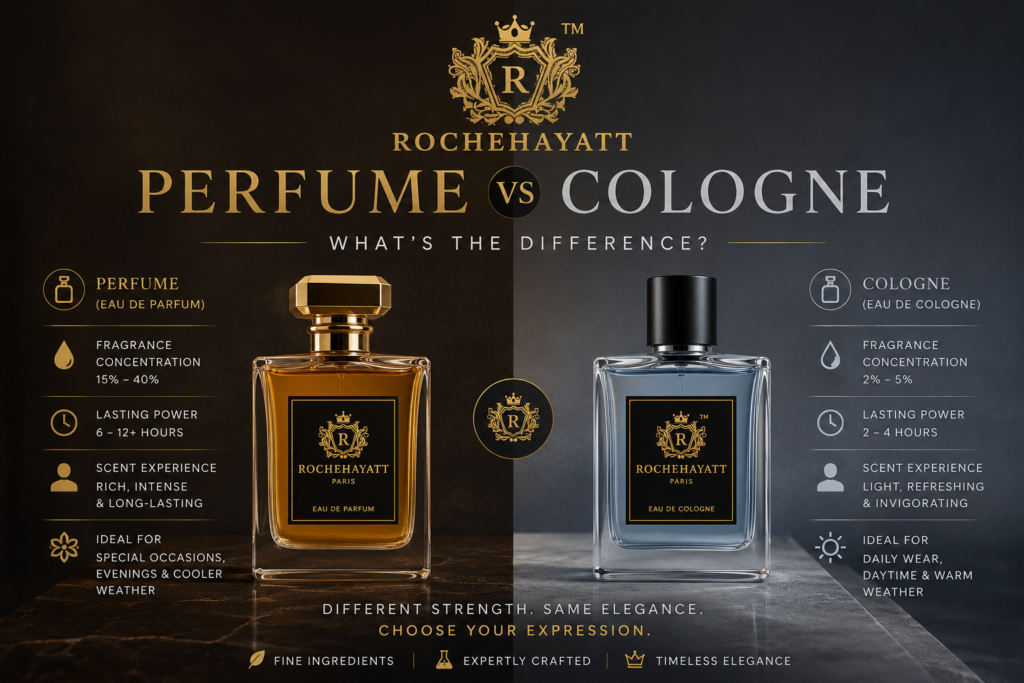
When shopping for fragrances, you’ve probably come across terms like Perfume vs Cologne. Many people believe perfume is for women and cologne is for men, but that’s one of the biggest myths in the fragrance world. The real difference lies in fragrance oil concentration, longevity, and scent intensity.
In this guide, you’ll learn everything about Perfume vs Cologne, including Eau de Parfum (EDP), Eau de Toilette (EDT), fragrance concentration, longevity, pricing, and how to choose the perfect scent for your lifestyle.
Understanding Fragrance Concentration
The primary difference between perfume and cologne lies in the concentration of fragrance oils. Every fragrance contains a mixture of aromatic oils, alcohol, and water. The amount of fragrance oil determines how strong the scent is and how long it lasts on the skin.
Generally, higher concentrations of fragrance oils result in stronger scents and longer wear times. Lower concentrations are lighter, fresher, and may require reapplication throughout the day.
Here’s a breakdown of the most common fragrance categories:
Perfume (Parfum)
Perfume, also known as parfum or extrait de parfum, contains the highest concentration of fragrance oils, typically ranging from 20% to 40%.
Because of its high concentration, perfume offers:
- Long-lasting scent (8–12 hours or more)
- Rich and complex fragrance profile
- Less product needed per application
- Higher price point
Perfume is ideal for special occasions, evening wear, or anyone who wants a fragrance that lasts throughout the day without frequent touch-ups.
Eau de Parfum (EDP)
Eau de Parfum contains approximately 15% to 20% fragrance oil concentration.
Benefits include:
- Lasts 6–8 hours
- Strong but not overwhelming
- Suitable for both daytime and evening use
- More affordable than pure perfume
Many modern luxury fragrances are sold as Eau de Parfum because they strike an excellent balance between longevity and cost.
Eau de Toilette (EDT)
Eau de Toilette contains around 5% to 15% fragrance oils.
Characteristics include:
- Lasts 3–5 hours
- Lighter and fresher scent
- Great for daily wear
- Typically less expensive
EDT fragrances are popular for office environments, casual outings, and warmer weather when heavier scents may feel overpowering.
Perfume vs Eau de Cologne
Traditionally, cologne contains about 2% to 5% fragrance oil concentration.
This makes it:
- Light and refreshing
- Short-lasting (typically 2–4 hours)
- Easy to reapply throughout the day
- More affordable than stronger fragrance types
Historically, Eau de Cologne originated in Germany and was known for its fresh citrus-based composition. Today, the term “cologne” is often used broadly in North America to describe men’s fragrances, regardless of concentration.
Is Cologne Only for Men?
One of the biggest misconceptions in the fragrance industry is that cologne is exclusively for men while perfume is only for women.
In reality, these terms originally referred to concentration levels rather than gender.
Modern marketing has blurred these distinctions. Many brands label men’s fragrances as “cologne” and women’s fragrances as “perfume” even when their actual concentrations are similar.
The truth is that fragrance has no gender. Anyone can wear any scent they enjoy. Whether a fragrance is floral, woody, spicy, citrusy, or musky comes down to personal preference rather than strict gender rules.
Longevity: Which Lasts Longer? Compare Perfume vs colonge
If you’re looking for a fragrance that lasts all day, perfume generally outperforms cologne due to its higher concentration of fragrance oils.
Average longevity by type:
- Perfume: 8–12+ hours
- Eau de Parfum: 6–8 hours
- Eau de Toilette: 3–5 hours
- Cologne: 2–4 hours
However, longevity also depends on factors such as:
- Skin type
- Weather conditions
- Fragrance ingredients
- Application method
For example, woody, oriental, and amber-based fragrances typically last longer than fresh citrus scents regardless of concentration.
Price Differences – Perfume vs Cologne
Since perfume contains a higher concentration of fragrance oils, it usually costs more than cologne.
Several factors contribute to pricing:
- Quality of ingredients
- Fragrance concentration
- Brand reputation
- Packaging and presentation
Although perfume may have a higher upfront cost, it often requires fewer sprays per use, which can make it more economical over time.
Cologne, on the other hand, offers a budget-friendly option for those who prefer lighter scents or enjoy reapplying throughout the day.
When Should You Choose Perfume or Cologne? Perfume Compared to Cologne.
Perfume is an excellent choice if you:
- Want maximum longevity
- Prefer rich, intense fragrances
- Attend formal events frequently
- Need a scent that lasts all day
- Don’t mind investing more in fragrance
Because perfume is highly concentrated, a little goes a long way. Applying too much can become overwhelming, so moderation is key.
When Should You Choose Cologne?
Cologne may be the better option if you:
- Prefer lighter fragrances
- Live in a warm climate
- Need a scent for casual everyday use
- Enjoy refreshing citrus or aquatic notes
- Want a more affordable fragrance option
Many people also choose cologne for daytime activities because it feels clean, fresh, and less intrusive in shared environments.
Application Tips for Better Performance
Regardless of whether you choose perfume or cologne, proper application can improve longevity and projection.
Apply to Pulse Points
Spray fragrance on areas where body heat naturally radiates:
- Wrists
- Neck
- Behind the ears
- Inner elbows
These areas help diffuse the scent throughout the day.
Moisturize First
Fragrances last longer on hydrated skin. Applying an unscented moisturizer before spraying can significantly improve performance.
Avoid Rubbing
Many people rub their wrists together after applying fragrance. This can break down fragrance molecules and alter the scent profile. Instead, allow the fragrance to dry naturally.
Store Properly
Keep fragrances away from direct sunlight, humidity, and extreme temperatures. Proper storage helps preserve the scent’s integrity and extends shelf life.
Final Thoughts
The difference between perfume and cologne ultimately comes down to fragrance concentration, longevity, and personal preference. Perfume contains a higher concentration of fragrance oils, making it stronger, richer, and longer-lasting. Cologne offers a lighter, fresher experience that works well for everyday wear and warmer climates.
Rather than focusing solely on labels, consider how long you want your fragrance to last, the occasions you’ll wear it for, and the scent profile you enjoy most. Whether you choose perfume, cologne, Eau de Parfum, or Eau de Toilette, the best fragrance is the one that makes you feel confident and comfortable.
Understanding these distinctions allows you to make smarter fragrance purchases and build a collection that perfectly suits your lifestyle.
Understanding the difference between perfume and cologne can help you make more informed fragrance choices. While perfume contains a higher concentration of fragrance oils, offering a richer scent and longer-lasting performance, cologne provides a lighter, fresher fragrance that is ideal for everyday wear. The right choice ultimately depends on your personal preferences, lifestyle, budget, and the occasions for which you’ll be wearing the fragrance. Rather than focusing on labels alone, consider factors such as longevity, scent intensity, and how the fragrance complements your personality. Whether you prefer the luxurious depth of a perfume or the refreshing appeal of a cologne, selecting a scent you genuinely enjoy is the key to leaving a lasting impression.
It is the Best affordable EDP under 1000 in India for men who want one fragrance that handles everything — and handles it well.
The RocheHayatt Intense Long Lasting Perfume delivers a fruity woody ambery EDP at 20% oil concentration with blends imported from Edom, France. Pineapple and mandarin on top. Grapefruit and vanilla at the heart. Ambergris, oakmoss, and musk at the base. IFRA certified. Cruelty-free. 100ml natural spray format. perfume vs colonge